

In early May, Google’s “Duplex” dominated the news (in addition to preparations for a certain UK wedding). Demos of the robo-caller, sounding disarmingly alive while scheduling haircut appointments and dinner reservations, had us humans talking.
Its authenticity was bolstered by a smattering of ums and uhs. All that was missing were a few “likes”, and an upward inflection at the end of sentences — as in, “I want to um, like, make a reservation for Saturday night?” The initial creep out factor for many was high.
Duplex raises a number of ethical questions, because it’s so lifelike. Among them: Should a bot be obligated to identify itself as such, when there’s a human on the other end of the line – especially if the call is being recorded?
A pre-recorded telemarketing message doesn’t necessarily start out with, “This is a recording…”, but then again it’s pretty easy to spot after a few seconds. If the first few sentences don’t tip us off, we realize we’ve been duped once we try asking a question.
Then, we usually hang up.
Duplex is interactive. It can pivot, for example, if the flesh-and-blood hostess replies that there are no tables available at 6:30. It will then inquire about a table for two at 7 p.m.
I’m not a product visionary. I don’t see a two-inch wire and think, “If I bend this a few times, I could use it to clip loose papers together and call it a ‘paper clip’.” But it’s easy to see the utility of a robo-caller that gets mundane tasks done, while sounding authentically human.
So, what if the task isn’t mundane, at least to some of the humans involved?
As I watched the Duplex demos, I flashed back to a job interview from a few years ago. It was a first-round screener — an exercise that doesn’t usually require much prep, but is a way for company and candidate to size each other up. Mostly it’s a forum to assess whether the candidate is fundamentally under/over qualified.
It’s also an opportunity for a candidate to get a first read on cultural fit. Occasionally, companies – especially the “hot” ones – forget this.

The aforementioned interview involved a recorded phone screener. I had never heard of such a thing. I went through a 20-minute online “training” to learn how the tool worked, and how the interview would go.
I was issued an applicant ID, and could call at any time within a date range. A series of pre-recorded questions would be put to me, and when I was ready to answer each one I was to press a button and begin speaking at the beep. When I stopped speaking after each answer, the tool would take my silence as a sign I was finished, and move on to the next question.
It wasn’t like a voicemail message that could be re-recorded if I wasn’t happy. I had one shot.
I am not sure why I went through with the interview. I have no clue who, if anyone, even listened to my recorded responses. Because I spent that interview essentially talking to myself, I never got a sense of how it had gone. What’s more, I learned absolutely nothing about the role. There was no way to ask questions.
Here’s what I did learn about the company and its culture:
The company was more interested in checking boxes – “Did she confirm she has 5+ years of experience doing XYZ?” – than in interacting to assess personality and cultural fit.
The corporate culture was not for me. Whether I was, as I suspected, overqualified for the role, the company had demonstrated that employees were just numbers. Widgets.
The company misjudged the balance of power between us. I was interviewing them too, and they bombed.
I can easily imagine Duplex serving as a more sophisticated version of the unfortunate interview tool I experienced. It could certainly help move widgets along the assembly line faster, and at lower cost. But, does it stand to reason that a bot will be as effective at screening out the “bad” fits?
And what if the strongest candidates remove themselves from consideration, because they believe they deserve a flesh-and-blood partner for the interview dance?
I hope companies that ultimately gain access to Duplex technology use it appropriately. Booking a table for Saturday night dinner is a mundane task. The two-sided evaluation of a human being’s fit for a role is not.
This is not to say that a non-bot interviewer cures all ills. I also recall a phone screener where the interviewer – who sounded like a summer intern – read verbatim from a script.
But that’s a story for another post…

 Last week marked my two-month anniversary as a Chicagoan, during which time life has at turns felt rushed (the cross-country drive) and plodding (unpacking box and after box). It’s been exhilarating (everything is new!) and stressful (new things are hard!). I haven’t had time for homesickness for the Bay Area.
 I moved to San Francisco straight out of grad school in New York. I had an apartment, but no job and just one friend in the Bay Area. When I tell that story, folks remark on how risky/brave it was – which never occurred to me back then. I had confidence that I’d find a job in a few months and meet new people. Everything would be fine, if I took it one step at a time.
 I’m planning a farewell tour of the Bay Area, but know I’ll barely make a dent in two decades of favorite restaurants, neighborhoods and friends. I’d like to slip up to Seattle for a few days, but may not have time.
 In my bones, I’m a Western girl – with the boots and old western DVDs to prove it. It’s tough to leave, but I figure there’s a condo in Austin, Santa Fe or Flagstaff waiting for me – in retirement, or maybe before. Who knows? The only thing that’s constant is change.
 I joined Facebook in early 2009, a respectable four years after the social media network gained popularity beyond the American college crowd. No early adopter, I wasn’t a bandwagoner either.
 Some Facebook users “like” their own posts. Why do they do this? Isn’t their favorable opinion of the content kind of implied, by the decision to post it? Maybe by liking the post they mean to suggest it’s especially worth a read – but I’ve yet to see someone like just SOME of his/her posts. If it’s thumbs up for some, it’s usually a thumbs up for all.
 Facebook offers several ways to reach out to individual friends with personal messages. Remember “poking” just to say hello? Poking still exists, although none of my friends (thankfully) ever embraced the feature. There’s also private messaging, and the Facebook Messenger app.
 In April, President Trump ordered the Department of the Interior to review all designations of national monuments greater than 100,000 acres created since 1996.
 I suffer from a condition common among film buffs: classic movie backlog. Weekend binge watching is often my only defense against my DVR purging important stuff to free up space. When that happens, I’m like a hoarder on a reality show who finds an old VHS tape in a skip in my driveway, after an intervention.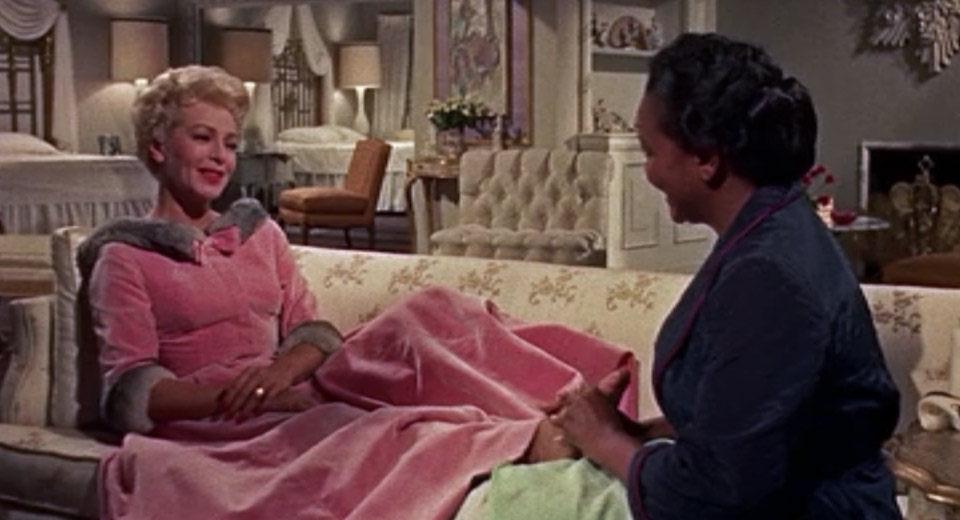


 Goulding’s also offers guided tours led by Navajo tribe members. I chose the half-day tour that takes in sections of the Park visitors can’t access on their own. I returned the next day to revisit my favorite, publicly-accessible areas, at my own leisurely pace.

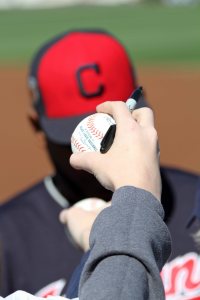 Opening day for Major League Baseball is just a few weeks away, and I’m already off my game. I returned from spring training more than one week ago, and am only now blogging about it.


 And remember Felicity, and the “haircut incident”? A shorter ‘do may have cost the Felicity the love of Ben, and Keri Russell her very first TV series. With the risk of such backlash, I’m surprised any woman ever goes shorter than a “lob”.


 In Write Field